
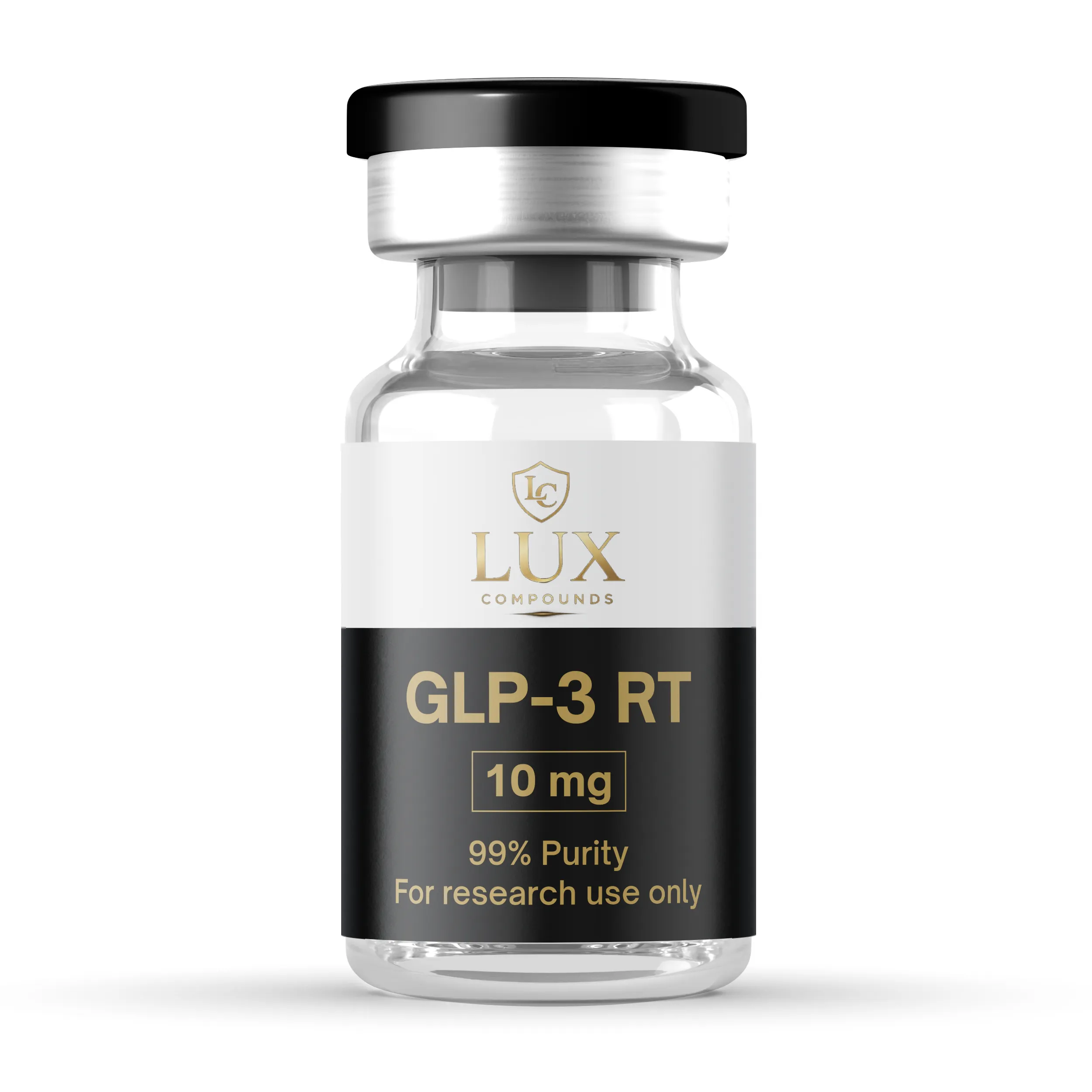
Metabolic Peptide Agonist
5.0 Reviews
BlendsGLP-3Research chemicals
A multi-receptor peptide agonist that targets GLP-1, GIP, and glucagon pathways, studied for its effects on metabolic regulation, energy balance, and weight management in clinical research. Premium Research Compound.
$71.99 – $242.99Price range: $71.99 through $242.99
We accept :

Third Party Tested by Freedom Diagnostics
The Science, Simplified
Gene Expression
Epigenetic Modulation
Upregulates 59% of affected genes Activates 47 DNA repair genes Suppresses inflammatory pathways
Gene Expression
Epigenetic Modulation
Upregulates 59% of affected genes Activates 47 DNA repair genes Suppresses inflammatory pathways
Gene Expression
Epigenetic Modulation
Upregulates 59% of affected genes Activates 47 DNA repair genes Suppresses inflammatory pathways
Key insight: In clinical research, this triple-action approach led to a staggering 86% reduction in liver fat, with 93% of participants reaching normal liver fat levels. This makes it a primary subject for studies involving MASH (Metabolic dysfunction-associated steatohepatitis) and other fatty liver conditions.
Key insight: Research shows it can reverse prediabetes in up to 72% of participants, returning them to normal blood sugar levels. Its ability to “rewire” hunger cues at a deeper level has led to nearly 4 in 10 participants losing 30% or more of their body weight—results previously seen only with invasive surgery.
What clinical studies report
GLP-3 (RT) is currently in Phase 3 clinical trials (the "TRIUMPH" program). While highly effective, its triple-action potency requires careful observation in a research setting.
🧿 Common Digestive Issues
Nausea
mild
Dysesthesia
mild
Diarrhea
mild
Safety Advantage
Non-Suppressive Elevation
📊 Discontinuation Rates
🚫 Trial Exclusions
⚡ Regulatory Status
💡 Researcher Notes
Technical specifications for this 39aa triple agonist
🔬 Molecular Profile
What Is Retatrutide?
Full Name
GLP-3 (RT) / Retatrutide
CAS Number
2381089-83-2
Molecular Weight
4,731.33 g/mol
Structure
39-Amino Acid Peptide
Purity
≥99%
🧊 Storage Requirements
Stability Information
Lyophilized (powder)
-20°C
24+ months
Reconstituted
2-8°C
~30 days
Handling
Avoid light and heat;
do not shake after adding solvent.
Common questions about GLP-3 (RT)
Peer-reviewed research
Not for human consumption. This product is sold exclusively for research and educational purposes. It is not intended to diagnose, treat, cure, or prevent any disease.
All clinical trial data and research findings presented on this page are sourced from peer-reviewed journals and official publications. They are provided for educational reference only and should not be interpreted as medical advice or product claims.
By purchasing this product, you confirm that you are a qualified researcher and will use it in accordance with all applicable laws and regulations.